British Antarctic Survey (BAS) is looking for people to work at its research stations in Antarctica in a range of roles. Electricians, plumbers, carpenters, plant operators and more are encouraged to apply for a job that offers the opportunity of a lifetime.
Successful applicants will work in some of the most remote and beautiful places on Earth, building lifelong friendships and contributing to science that’s critical for understanding our changing world.
Ben Norrish, Head of Vehicles, joined BAS in 2001 as a mobile plant technician and has spent 16 Antarctic seasons living and working on the ice.
“There’s something special about Antarctica and the people that adventure there that gets under your skin,” he said. “No matter how many times you go, when you step off the ship or aeroplane into Antarctica, you look up and take in where you are. That feeling of being in an amazing place is that same now as it was the first time. I would say to anyone who’s even a bit curious about what it’s like to live on the ice, take the leap and apply for the job of a lifetime – you won’t regret it, and you don’t know where it might take you.”
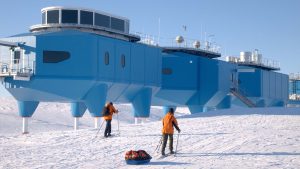
Eloise Saville is a carpenter at Halley VI Research Station, which sits on an ice shelf and is the furthest south of the BAS research stations. This is her first season in Antarctica.
“This job is unlike anything I’ve ever done before,” said Eloise. “I scrape ice off wood, drive skidoos and build things in one of the most extreme places on Earth, yet it’s funny how quickly it all feels normal. The people here are some of the most interesting and adventurous that I’ve met, and yet they’re normal too! If I’d known this was an option earlier, I’d have been working my way down here all along. It’s not just cold, it’s cool.”
BAS is a world leader in polar research and operations. Its research highlights the fragility of the Earth’s frozen environments, and what that means for us and our planet. BAS scientists discovered the hole in the ozone layer and identified key evidence for climate change in ancient ice.
It provides the UK’s national polar capability by operating research stations, aircraft and Royal Research Ship Sir David Attenborough, supporting science at the poles and securing the UK’s presence in Antarctic affairs.
Contracts run from six to 18 months and are flexible. Salaries start at £29,273 per annum, with a benefits package. There are no external costs whilst living on station as all living expenses are covered – accommodation, food, travel, specialist clothing, tools and training.
The first batch of the jobs are now on the BAS website, with more to follow over the next three months – visit www.bas.ac.uk/vacancies